


-
How the $1B SpaceX offering exposed crypto’s blind spot
For retail investors shut out of private markets, tokenized SpaceX shares offered an unusual route into one of the world’s most coveted private companies. The blockchain-based tokens allowed investors to seek exposure without a conventional brokerage account and before any potential public listing.
Then practical limits got in the way.
In June 2026, xStocks indicated customer demand had surpassed $1 billion for tokenized SpaceX shares. Crypto platforms such as Bybit, Binance Wallet and Bitget Wallet highlighted access to the offering, creating considerable excitement among users keen to obtain exposure to Elon Musk’s aerospace venture.
Several investors ultimately secured no allocation.
A number of platforms withdrew their initiatives and returned funds after being unable to obtain the necessary underlying SpaceX shares to support the tokens. The incident quickly became a significant practical test for tokenized equities. It highlighted a core reality in blockchain-driven investment: Tokenization may convert ownership into digital form, yet it cannot generate assets that are unavailable.
-
The outcome of the tokenized SpaceX share offering
A potential SpaceX Initial Public Offering (IPO) had long been expected to draw attention. The aerospace firm sits at the center of several major trends: commercial space travel, Starlink satellite connectivity, defense technology and Elon Musk’s global profile. Many investors had sought a direct stake for years.
To address this interest, xStocks introduced SPCXx, a tokenized representation of SpaceX shares. The product aimed to offer blockchain-based exposure to the company, allowing trading through crypto platforms instead of standard brokerages.
Demand surged sharply.
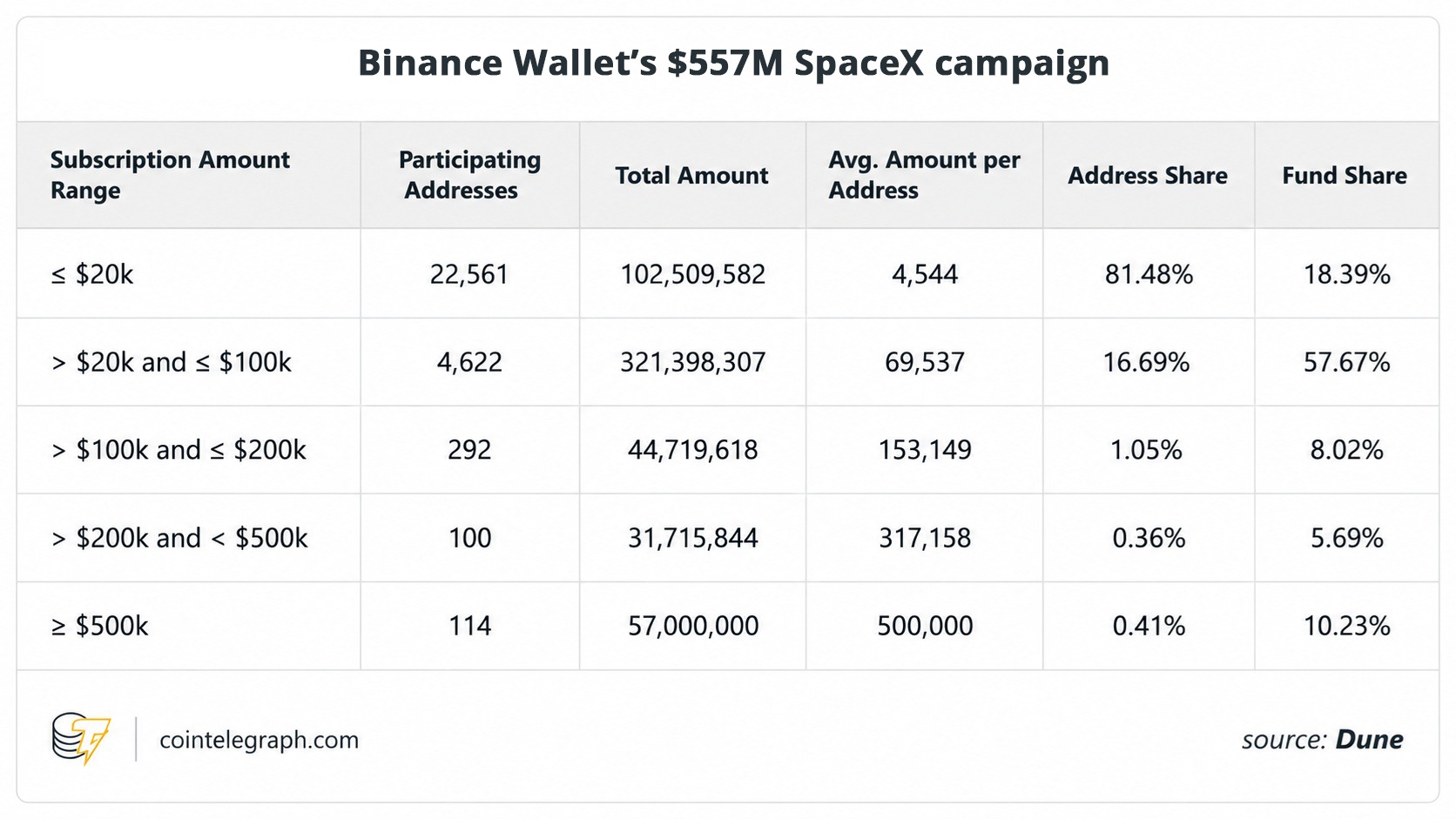
Reports indicated that subscriptions topped $1 billion before final allocation decisions. Binance Wallet alone reportedly drew more than half a billion dollars in commitments. Participants saw the opportunity as a rare way to gain exposure to one of the world’s most valuable private companies.

Then allocations were announced.
Several platforms involved said they had not obtained the required underlying shares to support token issuance. Without actual shares to back the product, the tokenized offering could not move forward.
This led to widespread cancellations and refunds.
-
How tokenized stocks work
Tokenized stocks are blockchain-based versions of traditional equity holdings. Rather than buying shares through a standard brokerage, investors purchase digital tokens that represent ownership or an economic interest tied to real shares held off-chain.
The process usually works as follows:
- A regulated custodian obtains the actual shares.
- A tokenization provider creates blockchain tokens backed by those shares.
- Investors buy and trade the tokens.
- The token’s value is designed to track the performance of the underlying stock.
The potential advantages are clear, although they come with important trade-offs.
Tokenized equities offer around-the-clock trading, global access, fractional ownership and easier use with crypto wallets and decentralized finance tools.
For investors in regions with limited access to US financial markets, tokenization offers a possible route to assets that were previously difficult or impossible to reach.
Did you know? The idea of tokenized securities predates blockchain. Financial institutions experimented with digital versions of stocks and bonds for decades, but blockchain made global, peer-to-peer ownership transfers easier and more transparent.
-
How xStocks planned to give investors SpaceX exposure
The SPCXx offering was built on a straightforward idea. For each token created, xStocks would obtain corresponding SpaceX shares to serve as collateral for the digital assets traded by participants.
From the investor’s standpoint, the process seemed simple. Users transferred funds, joined the subscription and expected to receive tokenized SpaceX exposure after allocation decisions.
The structure had special appeal because many retail participants believed tokenization could expand access to select IPOs historically reserved for institutional players and high-net-worth individuals.
What many overlooked was that the tokenization process still required genuine shares to be secured before the tokens could be issued.
This dependency became the decisive limitation.
-
Why demand outpaced available supply
The problem was not tokenization itself. It was the shortage of actual SpaceX shares needed to back the tokens. When investor interest in a company is exceptionally strong, only a finite number of shares can be distributed. Not every investor can receive the amount they want.
Traditional IPOs regularly face this constraint. Brokerages often receive fewer shares than clients request. Institutional investors compete aggressively for allocations. Retail investors often receive smaller stakes or no…
cointelegraph.com