


The Digital Asset Market Clarity Act hopes to live up to its name and bring regulatory clarity to the US crypto industry, but a crypto legal expert warns it risks doing the opposite.
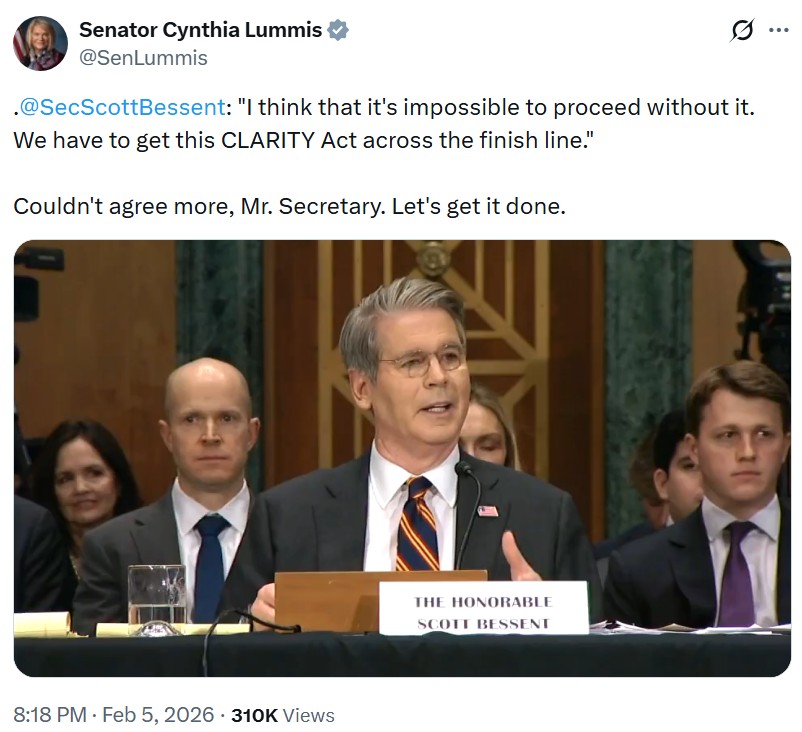
Yuriy Brisov, partner at Digital & Analogue Partners, says that Clarity may repeat the same structural mistake that the European Union made with its Markets in Crypto Assets Regulation (MiCA) by attempting to codify a fast-moving technology into static statutory categories.
For instance, Clarity excludes certain decentralized finance (DeFi) activities from being subject to the Act — which appears fair on paper. However, Brisov argues that freezing DeFi’s regulatory perimeter in legislation is itself the problem.
Magazine spoke to Brisov about why he believes comprehensive crypto frameworks like Clarity and MiCA can age poorly and how DeFi projects could get stuck in slow-moving legislative processes.
This conversation has been edited for clarity and length.
Magazine: Is the US trying to legislate crypto too rigidly, as Europe arguably did under MiCA?
Any comprehensive crypto regulation is doomed not to work, since technology develops much faster than legislation. MiCA’s treatment of DeFi is a good example.
If we look at MiCA, it is legally in place, but EU member states struggle with implementation because it was not drafted with DeFi in mind.

DeFi is now one of the hottest areas in crypto, with about $100 billion locked in protocols. MiCA requires DeFi projects to run Know-Your-Customer (KYC) checks, and Directive on Administrative Cooperation 8 (DAC8) requires reporting of clients’ residency and transactions.
That may work for stablecoins, but not for DeFi.
Read also
Features
DeFi abandons Ponzi farms for ‘real yield’
Features
Billions are spent marketing crypto to sports fans — Is it worth it?
Magazine: Could CLARITY create regulatory barriers for US projects operating globally?
First, Clarity will slow down the US. The second issue is that it is not aligned with frameworks like MiCA and DAC8.
What does that mean if I am an American project? Should I operate only in the United States? Would I struggle to attract clients from Europe or other jurisdictions?
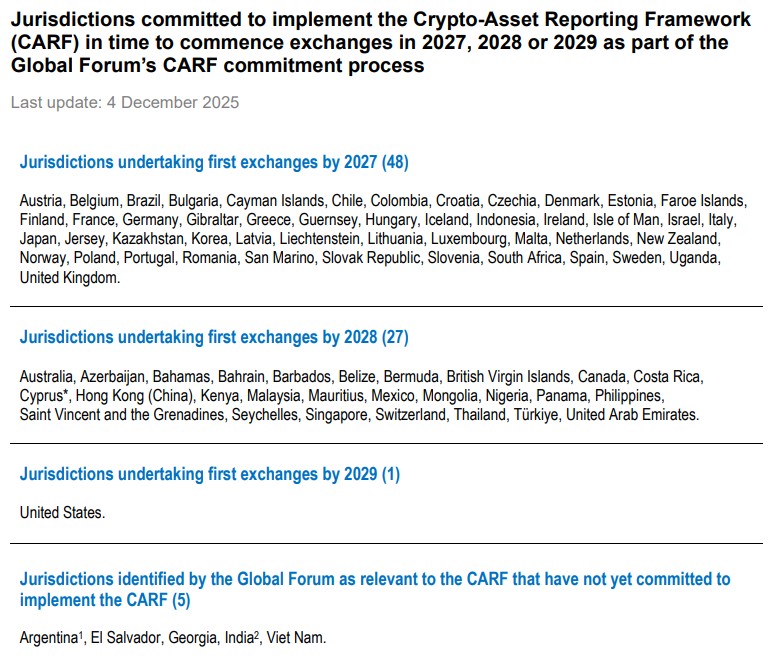
The US has shown its intention to align with the OECD’s Crypto-Asset Reporting Framework (CARF). That raises questions about how Clarity’s DeFi exemptions would interact with tax reporting and cross-border compliance obligations.
What would have been great is to follow Project Crypto, continue moving on a case-by-case basis and only legislate when you have something certain, like stablecoins.
With Genius, it was a necessary step because the world wanted to understand the US stance on stablecoins. But even this Act has serious flaws. With Clarity, it will be even worse.
I do not think they will adopt Clarity in the near future. And if they do, it would be a huge mistake.
Read also
Features
DeFi abandons Ponzi farms for ‘real yield’
Features
Billions are spent marketing crypto to sports fans — Is it worth it?
Magazine: Has the industry lost something with the departure of a hardline regulator like former SEC chair Gary Gensler?
I am not saying that I miss Gensler, but he played an important role. We must understand that Paul Atkins’s Project Crypto is only possible because Gensler was there before.

He did issue spotting. He marked the map of different crypto risks. The new commission said, let’s work with these risks. We see how Paul Atkins and his crypto task force gradually create statements about memecoins, NFTs and crypto securities.
Read also
Features
DeFi abandons Ponzi farms for ‘real yield’
Features
Billions are spent marketing crypto to…
cointelegraph-magazine.com