


Clarity may get a vote, but don’t get your hopes up yet
Despite wealthy memecoin entrepreneur Donald Trump agreeing to an ethics deal, the Clarity Act is floundering as the August recess deadline looms.
Senate Majority Leader John Thune doesn’t believe the Act has the votes to pass just yet, but may bring it to a vote anyway to “get Clarity started. We’ll see where the votes are.”
The ethics deal would prohibit all US officials from issuing or sponsoring digital assets, but contains some “get out of jail free” provisions for the President that the Democrats are unhappy with, including the fact the rules expire the day he is scheduled to leave office in 2029.
The ethics provisions will also be enforced by the Attorney General that Trump appointed. The Democrats instead want state Attorney Generals to enforce it — but Trump seems unlikely to agree to empower dozens of state AGs to attempt to prosecute him.
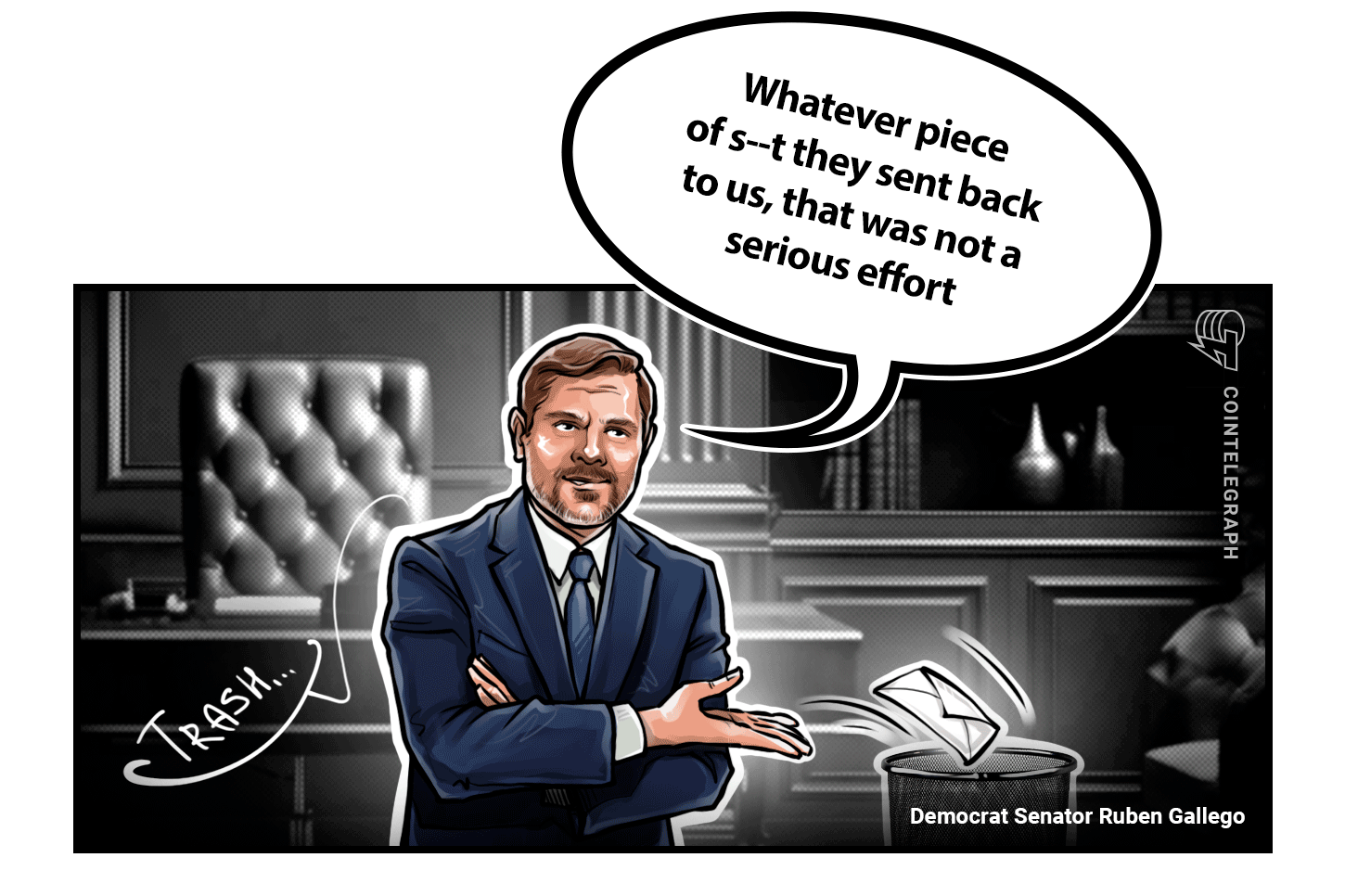
The White House described the bill as the “most comprehensive and wide-ranging ethics provision in history,” while Democratic Senator Ruben Gallego described it as a “piece of shit” and “not a serious effort.”
Negotiations are continuing to find a deal both sides can live with, but given the lack of trust, it’s not going to be easy to find a compromise.
Goldman Sachs CEO David Solomon conceded the bill is “not perfect” but has supported it anyway, along with Fidelity and Charles Schwab who represent many trillions in assets under management each.
Law enforcement organizations have also begun to signal support, with The National Fraternal Order of Police representing hundreds of thousands of members, stating the latest version of the BRCA (which protects developers of decentralized protocols) would not impede investigations into money laundering and fraud.
The odds of the bill passing this year are at 38% on Polymarket.

BitMEX to shut down after 11 years as class action launched against it
BitMEX, one of the pioneers of cryptocurrency derivatives trading, announced it will shut down operations in September after 11 years.
BitMEX launched in 2014 and became known for introducing the 100x leverage perpetual swaps.
In recent years volumes have tanked increased competition from major exchanges like Binance and decentralized protocols like Hyperliquid.
CryptoQuant CEO Ki Young Ju said BitMEX’s share of the Bitcoin futures market has fallen to just 0.08%, with roughly $84 million in daily trading volume.
“It was a great exchange that helped shape the industry, and now it is passing the torch to the next generation of exchanges it inspired,” Ju said.
BitMEX’s utility token BMEX collapsed in value after the announcement. That same day, news emerged of a class action lawsuit accusing the crypto derivatives platform of fraudulently engineering customer liquidations to seize traders’ collateral. BitMEX denied the allegations and said it had successfully defended itself against similar claims in the past.
Restructuring adviser Roshan Dharia told Cointelegraph the exchange’s demise shows the industry is consolidating.
The top five platforms now control an estimated 80% of global spot volume, leaving mid-tier and regional exchanges with shrinking margins and no viable path to scale… The headwinds are structural, not cyclical.
As if to undescore the point, BitMart subsequently announced it would also close in the coming months.

S&P launches blockchain fundamentals index for digital assets
S&P Dow Jones Indices and Pantera Capital have launched a digital asset index that tracks the major crypto assets — but doesn’t include Bitcoin or XRP.
The S&P Pantera Digital Asset Index is designed to be the benchmark crypto index for institutions, but it screens out blockchains based on minimum thresholds for protocol revenue, market capitalization and liquidity.
The index launched with 18 constituents, with Ether (ETH), BNB (BNB), Solana (SOL), TRON (TRX) and Hyperliquid (HYPE) as its five largest holdings, while Bitcoin (BTC) and XRP (XRP) are the largest non-constituents.
The latest index follows a broader industry push to develop institutional-grade benchmarks for digital assets, with similar products including the Nasdaq Crypto Index US ETF, the Franklin Crypto Index ETF and the the Coinbase Store of Value Index among others.
Robinhood to expand prediction markets as CFTC issues new warning
Robinhood is reportedly discussing plans to expand its existing prediction markets offerings with crypto exchange Crypto.com.
According the Wall Street Journal the talks involve integrating yes-or-no event contracts supplied by Crypto.com. Robinhood launched its prediction markets in March 2025, initially facilitated by Kalshi in order to comply with regulatory requirements from the US Commodity Futures Trading Commission (CFTC).
Bernstein analysts last week raised its price target on Robinhood (HOOD) stock to $160 from $130 per share, based on the company’s outlook for prediction markets and…
cointelegraph.com