


-
How Bitcoin perps are entering regulated US markets
For years, Bitcoin perpetual futures have ranked among the most important products in crypto trading. They account for a large share of global crypto derivatives activity and are widely used by traders seeking leverage, hedging tools and short-term exposure to market moves.
Despite their popularity, perpetual futures have mostly operated outside regulated US markets. Most trading has taken place on offshore platforms. This left many American traders and institutions with limited choices: Avoid true perps, use offshore venues where permitted or turn to imperfect regulated alternatives.
That could now change.
In late May 2026, the US Commodity Futures Trading Commission (CFTC) approved KalshiEX to list the BTCPERP contract, a perpetual futures contract that references the spot price of Bitcoin. The decision marks an important step for crypto derivatives. It could also change how retail and institutional traders gain leveraged exposure to Bitcoin.
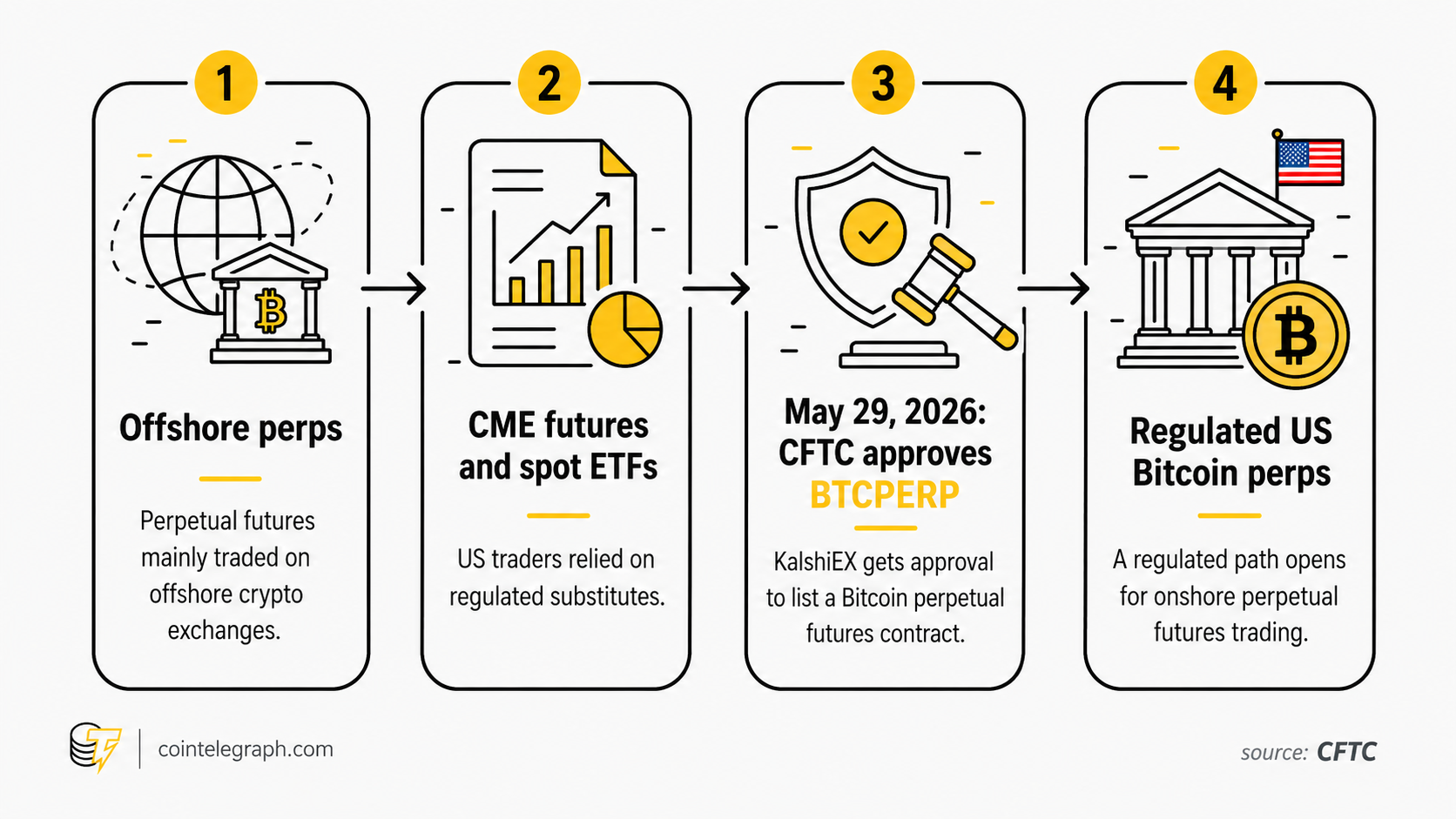
While the contract is important on its own, its larger meaning lies in the signal it sends: One of crypto’s most widely used financial tools is moving into regulated US financial markets.
-
What are Bitcoin perpetual futures?
A perpetual futures contract, often called a “perp,” is a type of derivative that lets traders take positions on Bitcoin’s price moves without holding the underlying asset.
Unlike traditional futures, perpetual futures have no set expiration date. Positions can stay open as long as traders maintain enough margin.
Standard futures contracts require traders to move into a new contract when the old one expires. Perpetual futures remove this step, making them more convenient and often more cost-effective for ongoing trading.
To keep perpetual contracts from moving too far away from Bitcoin’s spot price, platforms use a funding rate mechanism. Based on market conditions, traders in long or short positions make periodic payments to each other. This helps keep perp prices closer to the price of the underlying asset.
This simple design has helped perpetual futures become the preferred product for many crypto market participants.
-
How perpetual futures became crypto’s top trading product
Perpetual futures first became popular on offshore crypto exchanges. What started as a niche product grew into one of the most actively traded products in crypto.
The appeal is clear. These contracts provide leverage, letting traders manage larger positions with relatively modest capital. They allow traders to position for both rising and falling markets. They also avoid many of the practical challenges tied to traditional futures.
As the crypto sector grew, perpetuals became the go-to tool for speculators, hedge funds, market makers and arbitrage traders.
In many cases, perpetual futures trading volumes surpass spot market volumes for major cryptocurrencies. They also serve as a key venue for price discovery.
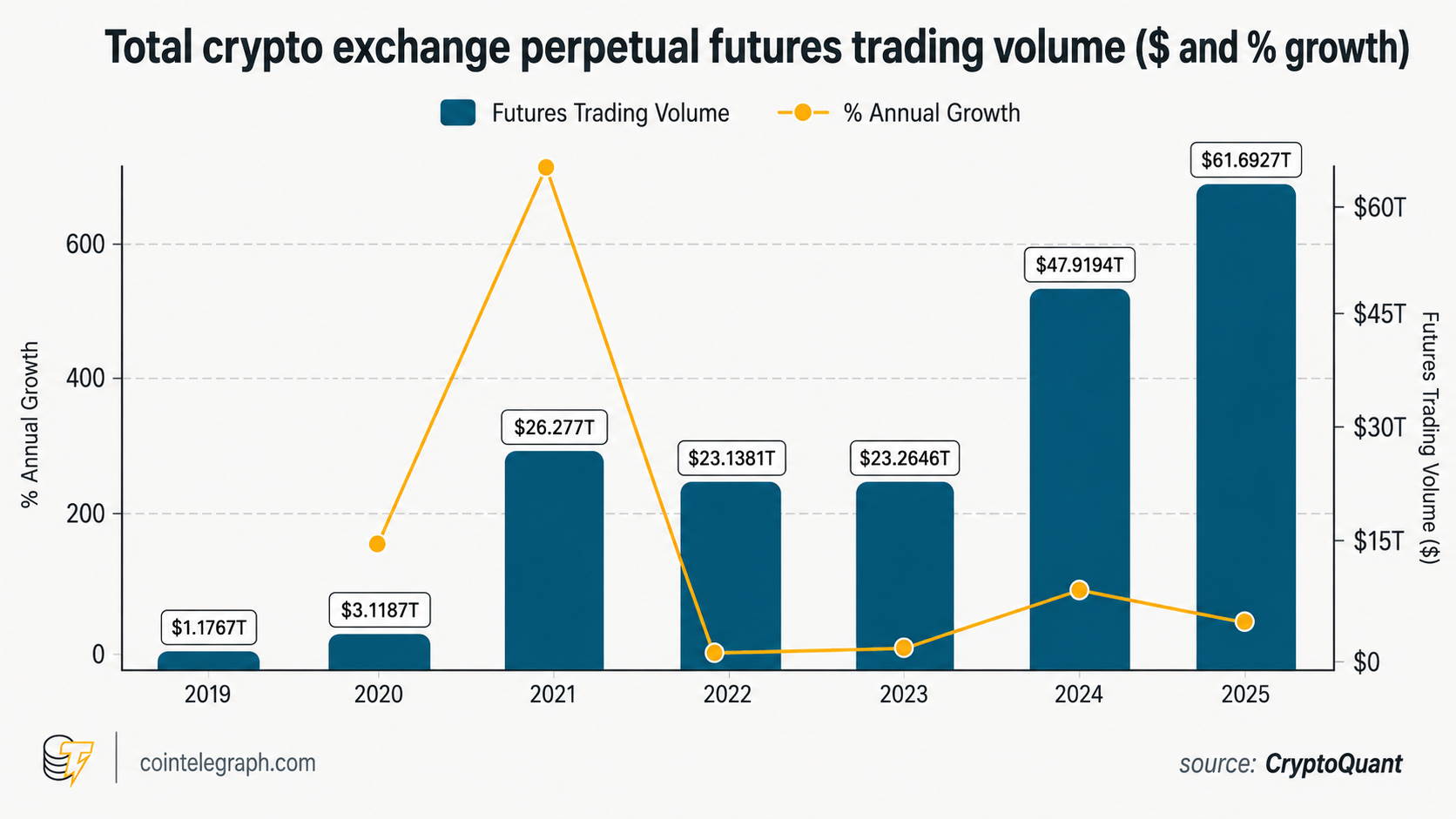

This growth has made perpetual futures one of the most important parts of crypto finance, even though their presence in regulated US markets has remained limited until recently.
Did you know? Unlike many financial products that began in traditional markets, perpetual futures first gained traction in crypto. The design solved a practical problem: Traders wanted futures-like exposure without constantly rolling contracts into new expiration dates.
-
Why the US stayed on the sidelines
For a long time, US regulators were cautious about crypto perpetual futures. That caution had a clear reason.
The hesitation was not about futures trading itself. Regulated futures markets have operated for many years. Instead, the concerns were tied to the features of several offshore crypto platforms.
Very high leverage, weak customer protections, limited transparency and risks of market manipulation made regulators reluctant to approve similar products in the US.
As a result, many US traders either used offshore platforms or relied on alternatives such as CME Bitcoin futures and, more recently, spot Bitcoin exchange traded funds (ETFs).
This created an unusual imbalance. One of crypto’s most popular products largely remained outside the reach of the world’s largest financial market. The recent approval of regulated Bitcoin perpetual futures may now help close that gap.
-
What exactly has the CFTC approved?
The CFTC recently approved KalshiEX’s Bitcoin perpetual futures contract, known as BTCPERP. The move gives the product a regulated path in the US.
Unlike many offshore alternatives, this contract operates under a US-regulated framework overseen by federal authorities.
The decision also gave the market more clarity on how perpetual futures can fit into existing futures rules. Rather than treating them as entirely new products, regulators found that they can work within current futures market rules if proper safeguards are in place.
The…
cointelegraph.com